
Leonardo da Vinci Self-Portrait is an oil and tempera painting (24.5 × 32.5 cm), dated 1475. At the age of 23, Leonardo painted his only known youthful self-portrait—an iconic work of Renaissance art in Florence. This masterpiece, executed independently, showcases refined technique and stands out for its essential uniqueness.
Description of Leonardo Self-Portrait
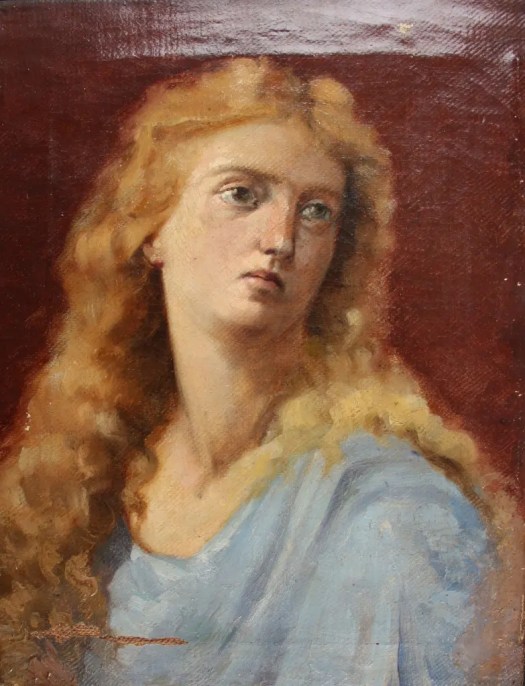
The portrait depicts a handsome young Leonardo with long hair and a blue garment, portrayed in a three-quarter view. The 1475 self-portrait captures his character and emotions—what he referred to as the “motions of the soul.” The face is rotated approximately 15 degrees, with pupils directed to the viewer’s right, a typical position for a mirror-based self-portrait.
Leonardo Youthful Self-Portrait – Florentine Renaissance
As a young artist, Leonardo painted the angel in The Baptism of Christ, a work executed in the workshop of Andrea del Verrocchio. According to Vasari, Leonardo contribution surpassed that of his master. Between 1468 and 1475, during his formative years in Florence, he mastered materials, perspective, anatomy, and the study of light—elements synthesized in his first self-portrait.
The 1475 youthful self-portrait, housed in a private collection, is a Renaissance icon revealing Leonardo genius at 23. Its uniqueness is essential for understanding the master’s artistic evolution. In the Florentine Renaissance context, dominated by the individual’s centrality, Leonardo painted a realistic portrait that transcends mere physiognomy, uniting art and science, emotion and technique. The face’s three-dimensionality, introspective gaze, and emotional intensity make the self-portrait a Renaissance icon and a universal reference in art history.
Leonardo Technique and Style
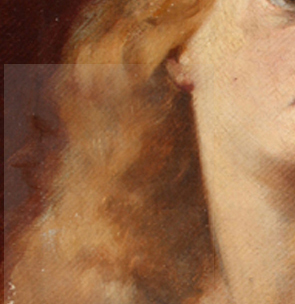
The water-like curls in Leonardo youthful self-portrait form a vortex among the hair, reflecting his studies on fluid motion. The water element is evident in his drawings of rivers, tides, clouds, rain, and waterfalls. Leonardo studied water vortices, visible in his curls. Similarly, the turbulent motions and deluge drawings preserved in the Royal Collection Trust, along with sketches from the Codex Hammer, highlight Leonardo interest in water movement.
Leonardo employed nuanced, a technique layering glazes to create transitions between light and shadow.
- A hidden profile of Leonardo (Portrait of Leonardo) emerges within the nuanced, adding depth to the work.
- The contrasted—movement and torsion of the head and torso—is observable in Lady with an Ermine (1490, National Museum in Krakow) and in Sketches of a Woman, Bust Length (c.1490, Royal Collection Trust).
Gioconda – Leonardo Self-Portrait (1475)
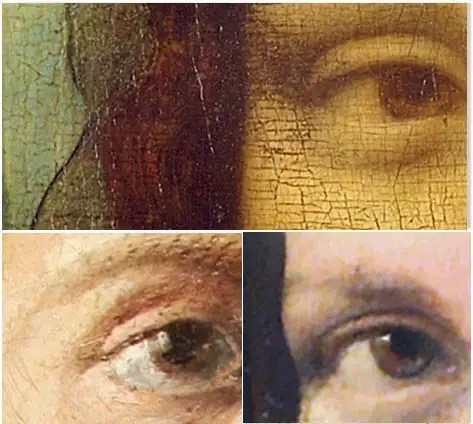
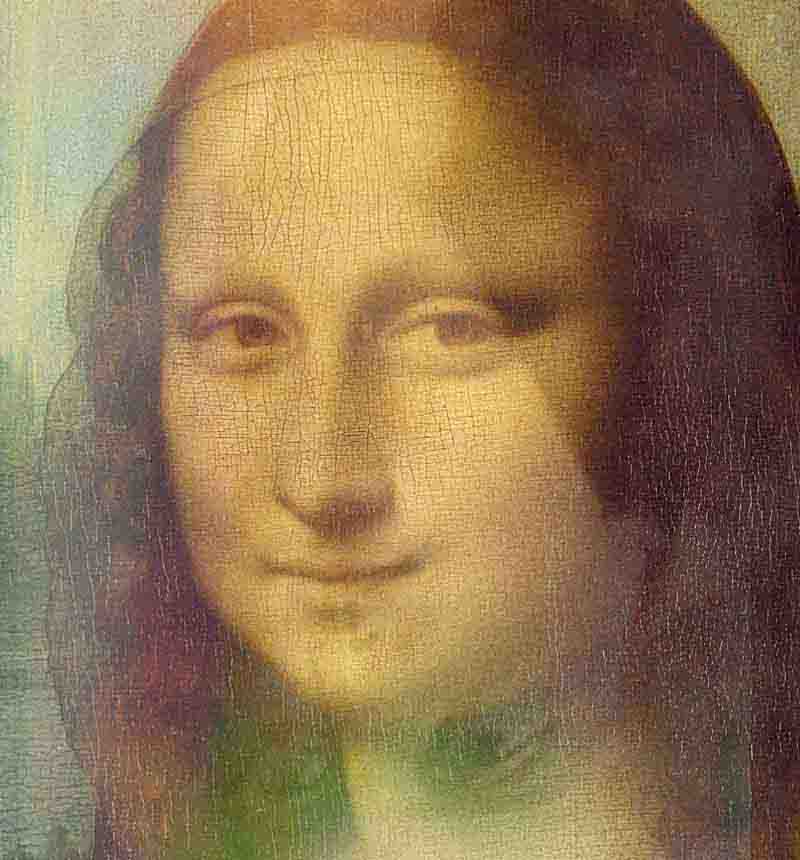
Gioconda reflects Leonardo da Vinci’s visage; notably, the overlapping drawing aligns with his youthful self-portrait. The contours of the Gioconda, viewed from a mirrored perspective, recall Leonardo’s self-portrait, suggesting the artist used his own image as inspiration. The enigmatic smile of the Gioconda appears as an ideal reflection of Leonardo.
Iconography of Leonardo – Comparative ArtWorks
Leonardo’s face appears in several works, such as the Self-Portrait of Leonardo da Vinci of 1475, but also in the Annunciation 598 and in the bust of the apostle John
- The angel’s face in the Annunciation painting (Louvre Museum).
- The terracotta bust of the apostle John (c.1470–1480, private collection, Rome) are notable examples.
- The bronze sculpture, detail of David’s face (h. 126 cm, c.1472–1475, National Museum of the Bargello), created by Andrea del Verrocchio, for which Leonardo posed as a model.
- The angel in The Baptism of Christ, an oil and tempera on panel painting by Andrea del Verrocchio and Leonardo da Vinci.
- Study from a male model for the Virgin’s head, Annunciation (c.1475, Pierpont Morgan Library, New York).
- The Head of a Youth in Profile (c.1478, Royal Collection Trust).
Leonardo Signature – Monogram and Artistic Identity

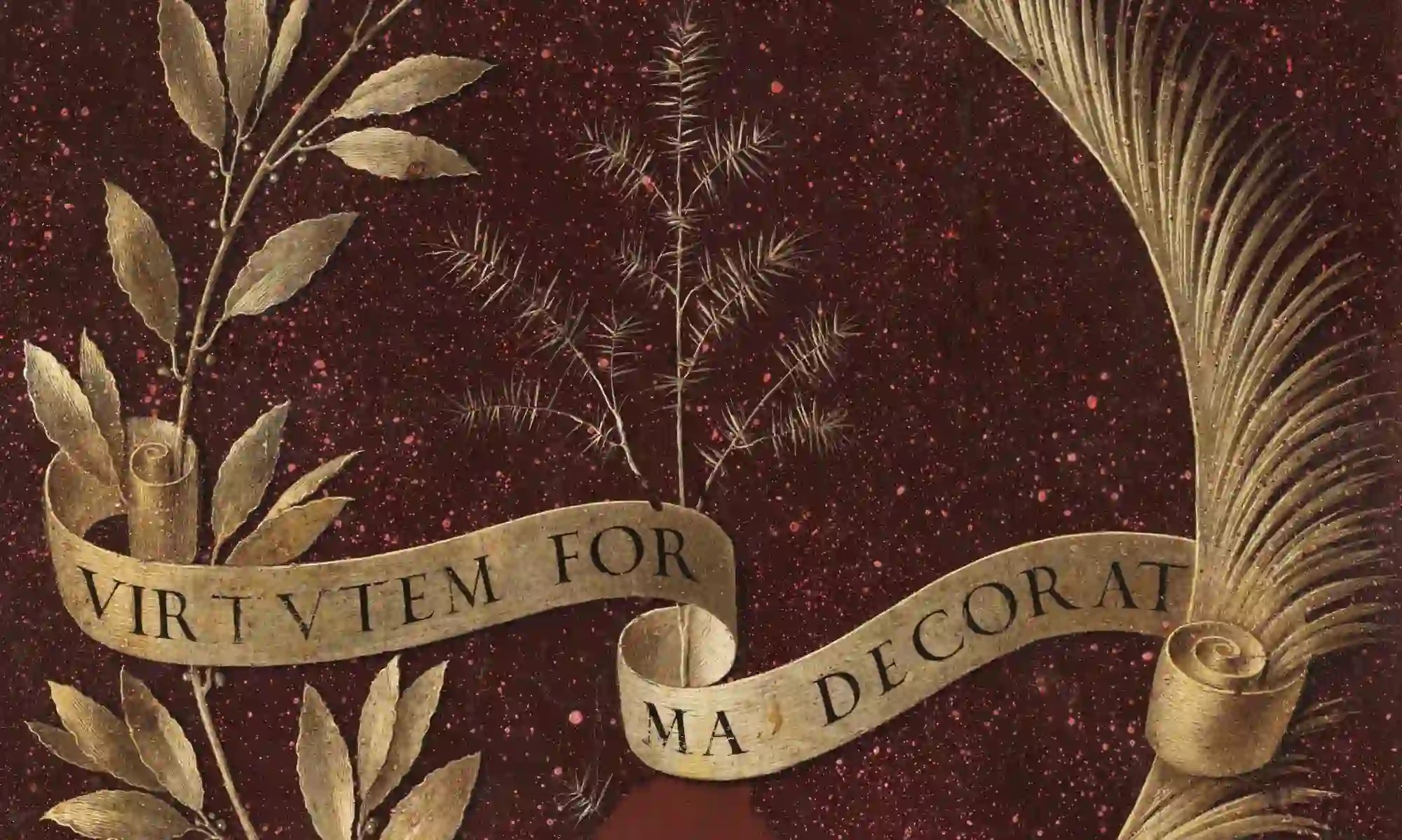
The 1475 Self-Portrait bears the only known signature attributable with certainty to Leonardo as a painter: “Vinci Leonardo.” The mirrored handwriting reveals his left-handedness. The monogram “LDV” holds symbolic value here, identifying Leonardo as both a scientific and artistic mind.
Self-Portrait by Leonardo da Vinci: 1475 Insights
Da Vinci Self-Portrait (1475), preserved in the new Leonardo da Vinci Galleries, it is the only scientifically documented true portrait of the artist.
A masterpiece of Renaissance art, it reflects his studies in anatomy, light, and fluid dynamics. Explore the iconic Leonardo da Vinci Self-Portrait and its significance..
Copyright © 2010 – 2025 · galleriedavinci.org · All rights reserved.
 Gallerie Leonardo da Vinci